Do Slip Wedding Dresses Show Every Line? A Guide to Fabric, Fit, and Undergarments

.jpg)
Slip wedding dresses have a reputation for being unforgiving, but that is not really the whole story.
Yes, a slip dress has a cleaner silhouette and usually uses less structure than a ball gown or heavily layered dress. But whether it shows every line has much more to do with the quality of the fabric, how the gown is lined, how it fits, and what you wear underneath it.
A well-made slip dress can skim the body beautifully without clinging to every little detail. The trick is knowing what to look for.
Do Slip Wedding Dresses Show Every Line?
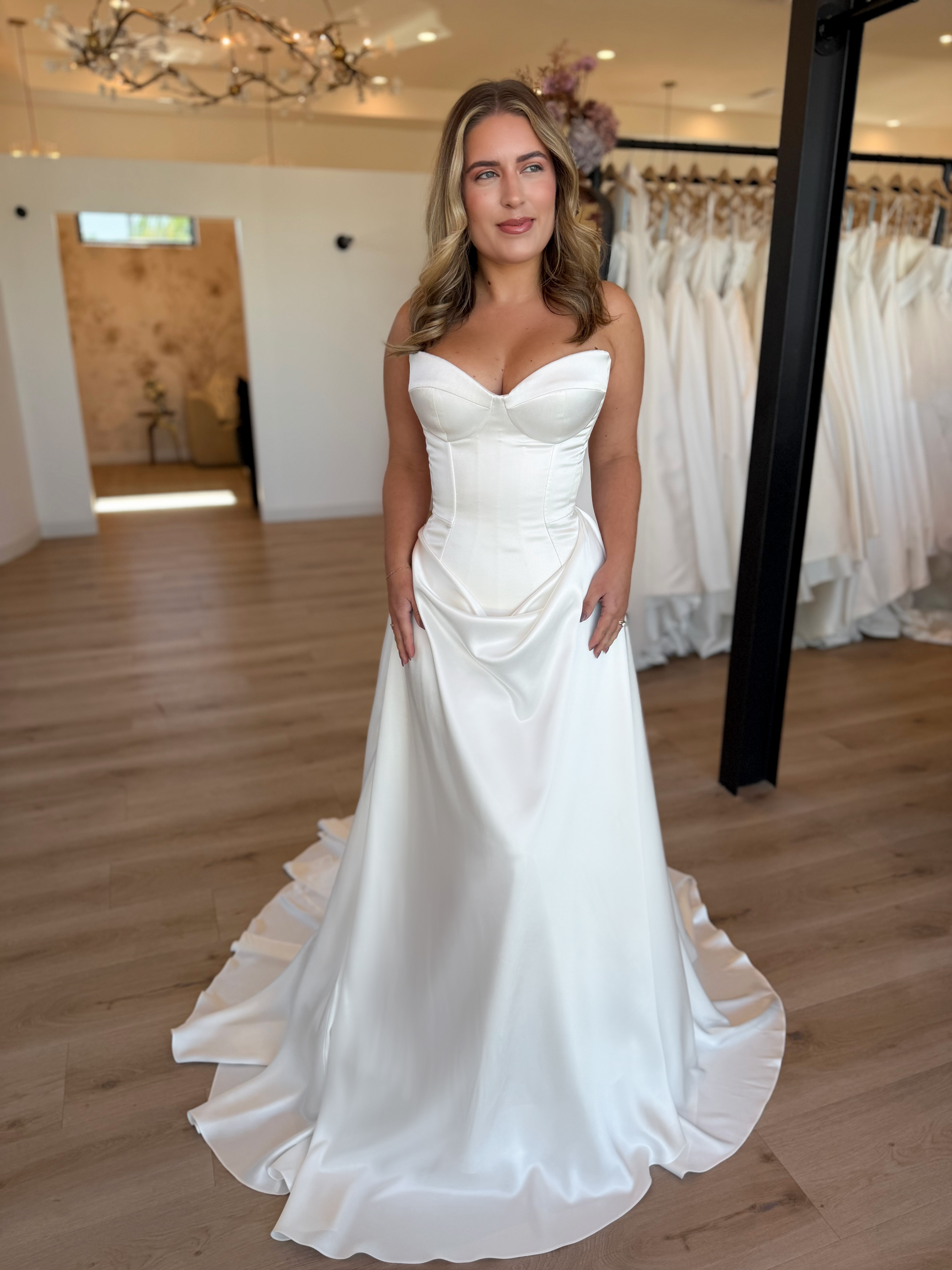
A high-quality slip wedding dress should drape over the body rather than stick to it. Double-lined silk, satin, or similar fabrics can make a major difference because they add weight and structure without taking away from that fluid, effortless look.
Thinner, single-layer fabrics are more likely to show seams, texture, or undergarment lines.
That is why two slip dresses can look completely different on the body even if they have a very similar shape.
The fabric matters. A lot.
Our stellar guide to how different wedding dress fabrics affect fit and drape is a helpful resource if you are trying to understand why one sleek gown hugs the body while another seems to float over it.
Why Does Fabric Quality Matter So Much?
Slip dresses rely heavily on the way the fabric moves. There is less volume, fewer layers, and usually fewer design elements to distract from the silhouette. That means the material itself is doing most of the work.
A thicker satin or double-lined silk can fall smoothly over the hips and waist, while a lighter fabric may cling more closely.
The best slip dresses have enough weight to create movement without looking stiff.
This is also why it is worth paying attention to how the dress feels when you walk, sit, and turn. A fabric that looks perfect while standing still may behave differently once you start moving.
For an even closer look at two of the fabrics most associated with sleek bridal silhouettes, we break down the differences between satin and silk wedding dresses, including their texture, structure, and drape.
What Does Double-Lined Mean?
A double-lined wedding dress has an additional layer of fabric underneath the outer layer.
That extra layer can help:
- Smooth the overall silhouette
- Reduce transparency
- Minimize visible seams
- Help the dress drape more evenly
- Create a little more structure through the body
It can make a surprisingly big difference, especially with satin and silk-inspired fabrics.
The result is still sleek, but it feels a little more substantial.
What Undergarments Should You Wear Under a Slip Wedding Dress?
The best undergarments are usually the ones you barely notice.
Seamless shapewear, laser-cut underwear, and smooth, lightweight pieces can help keep the silhouette clean without adding bulk.
For some brides, that may mean shapewear. For others, a simple seamless thong or brief is enough.
The goal is not to squeeze yourself into something uncomfortable. It is just to avoid seams, waistbands, or texture that might show through the fabric.
And depending on the construction of the gown, you may not need a traditional bra at all.
Many wedding dresses include some level of built-in support or internal construction, so your bridal stylist can help you figure out what works best with the specific dress you choose.
Should You Wear Shapewear Under a Slip Dress?
Only if you want to! Shapewear can help create a smoother base, especially under a fitted slip dress, but it is not a requirement.
The most important thing is that you feel comfortable.
If the shapewear creates a line at the waist or digs in somewhere, it can actually become more noticeable than wearing nothing at all.
That is why laser-cut, seamless options tend to work best.
Fit Matters Just as Much as Fabric
A slip dress should skim the body. It should not feel like it is being pulled tight across every curve.
If the gown is too small, the fabric may pull across the hips, waist, or bust and create lines that would not otherwise be there.
If it is too large, it can lose the clean shape that makes a slip dress so beautiful in the first place.
Proper alterations make a huge difference.
Even a simple-looking gown may require thoughtful tailoring through the straps, bust, waist, and hips to get that effortless fit.
And that is the funny thing about slip dresses: the simpler they look, the more important the fit becomes.
Are Satin Slip Dresses More Forgiving Than Silk?
It depends on the specific fabric. Some satins are heavier and more structured, while others are lightweight and fluid. Silk can also vary depending on the weave and weight.
Instead of focusing only on the fabric name, look at how the dress actually behaves on your body.
- Does it skim?
- Does it pull?
- Does the lining feel substantial?
- Can you see seams underneath?
Those details will tell you more than the label alone.
Fabric can also change dramatically in photographs. Our guide to wedding dress fabrics that shine on camera explains how satin, crepe, chiffon, mikado, tulle, and other materials react to light and movement.
What Should You Wear to Your Bridal Appointment?
If you think you may want a slip wedding dress, wear or bring simple nude seamless underwear to your appointment.
That gives you a better idea of how the dress will look without distracting lines underneath.
You do not need to show up in full bridal shapewear. In fact, it is often better to try the gown with minimal layers first so you can see how the dress itself fits.
Then you can decide whether you want any additional smoothing pieces later.
We’ve also put together a guide on what to bring to your bridal appointment if you want to feel a little more prepared before you arrive.
Slip Dresses Can Be Sleek Without Feeling Scary
Slip wedding dresses are meant to look effortless, not stressful.
A quality gown with good lining, proper fit, and the right undergarments can create a smooth, elegant silhouette without showing every line.
The best way to know how a slip dress will work for you is to try one on!
At LOVE Bridal Boutique in Jacksonville Beach, brides can explore different silhouettes, fabrics, and designers with an expert stylist in a private bridal suite.
Request your bridal appointment and see how different slip wedding dresses look and feel in person.
FAQs
1. Do slip wedding dresses show underwear lines?
They can if the fabric is thin or the undergarments have visible seams. Seamless or laser-cut underwear usually works best.
2. Should I wear shapewear under a satin wedding dress?
You can, but it is not required. Choose shapewear only if it makes you feel more comfortable and does not create new lines under the dress.
3. Are double-lined slip wedding dresses better?
Double lining can help create a smoother, more substantial drape and reduce visible seams or transparency, especially in lightweight fabrics.