Mikado Wedding Dresses: Why This Structured Fabric Creates Such a Striking Silhouette

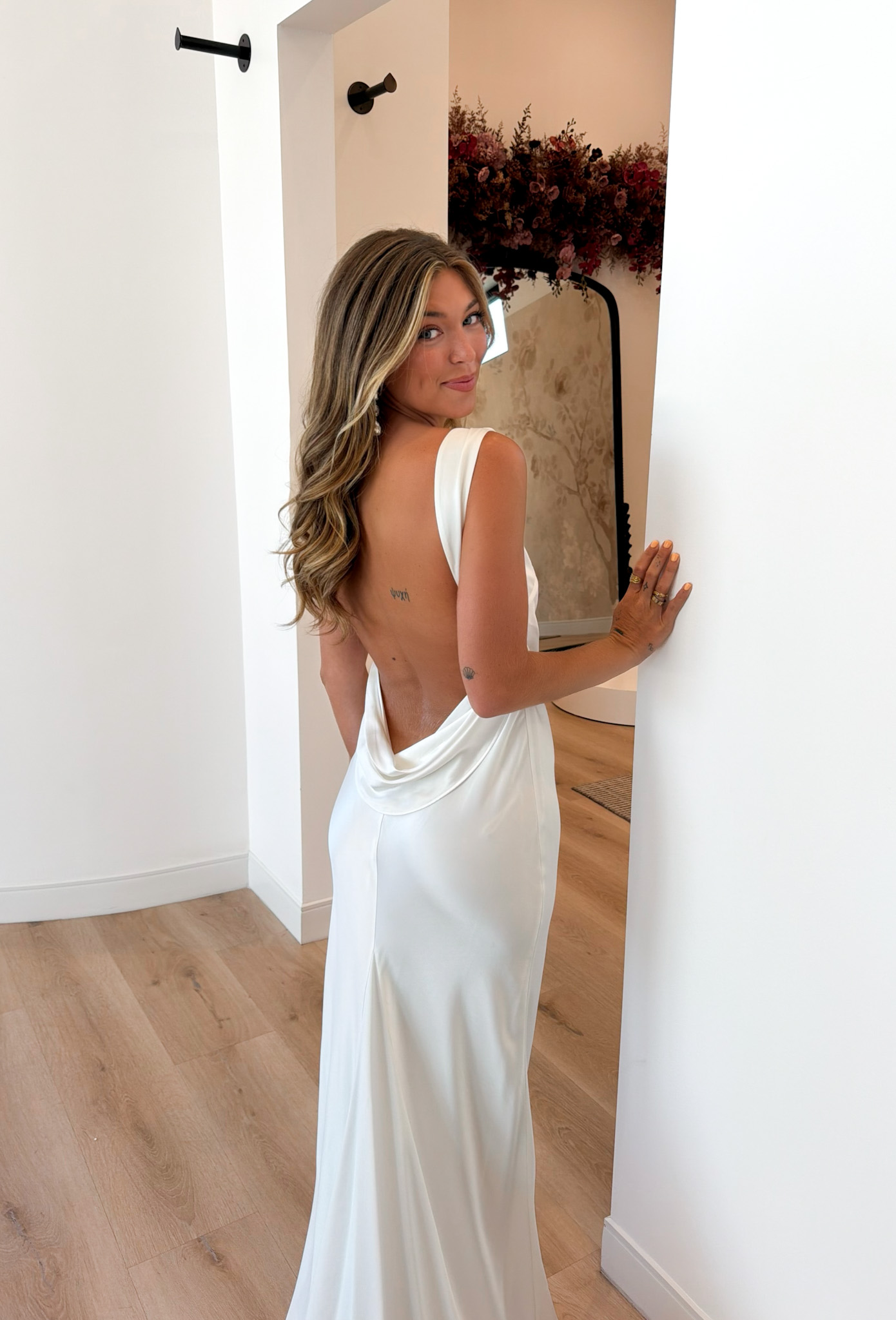
Some wedding dresses float around the body. A Mikado wedding dress does something entirely different! It creates a clear, intentional shape that can be appreciated from the moment a bride enters the room.
Known for its smooth finish and substantial feel, Mikado is often used for wedding gowns with sculptural skirts, defined waistlines, and dramatic architectural details.
The fabric holds its shape rather than falling softly against the body, making it a beautiful choice for brides who want a polished silhouette with unmistakable presence.
What Is Mikado Fabric?
Mikado is a structured fabric traditionally made from silk, although many contemporary wedding dresses use high-quality blended versions. It is heavier than chiffon, tulle or lightweight satin, with a smooth surface and a subtle sheen.
The fabric feels luxurious without needing extensive beading or lace. Its beauty comes from the way it is cut, folded and shaped. A Mikado gown may appear simple at first glance, but details such as a precise waist seam, curved neckline or carefully placed pleat can completely transform the silhouette.
Mikado is one of the fabrics that also photographs beautifully. Its smooth surface catches light gently, allowing the shape of the gown to remain visible without creating an overly glossy appearance.
How Does Mikado Create Clean, Sculptural Lines?
Mikado works particularly well for wedding dress silhouettes that depend on precise shaping. Because the fabric has body, it can create clean lines without clinging to every curve or collapsing as the bride moves.
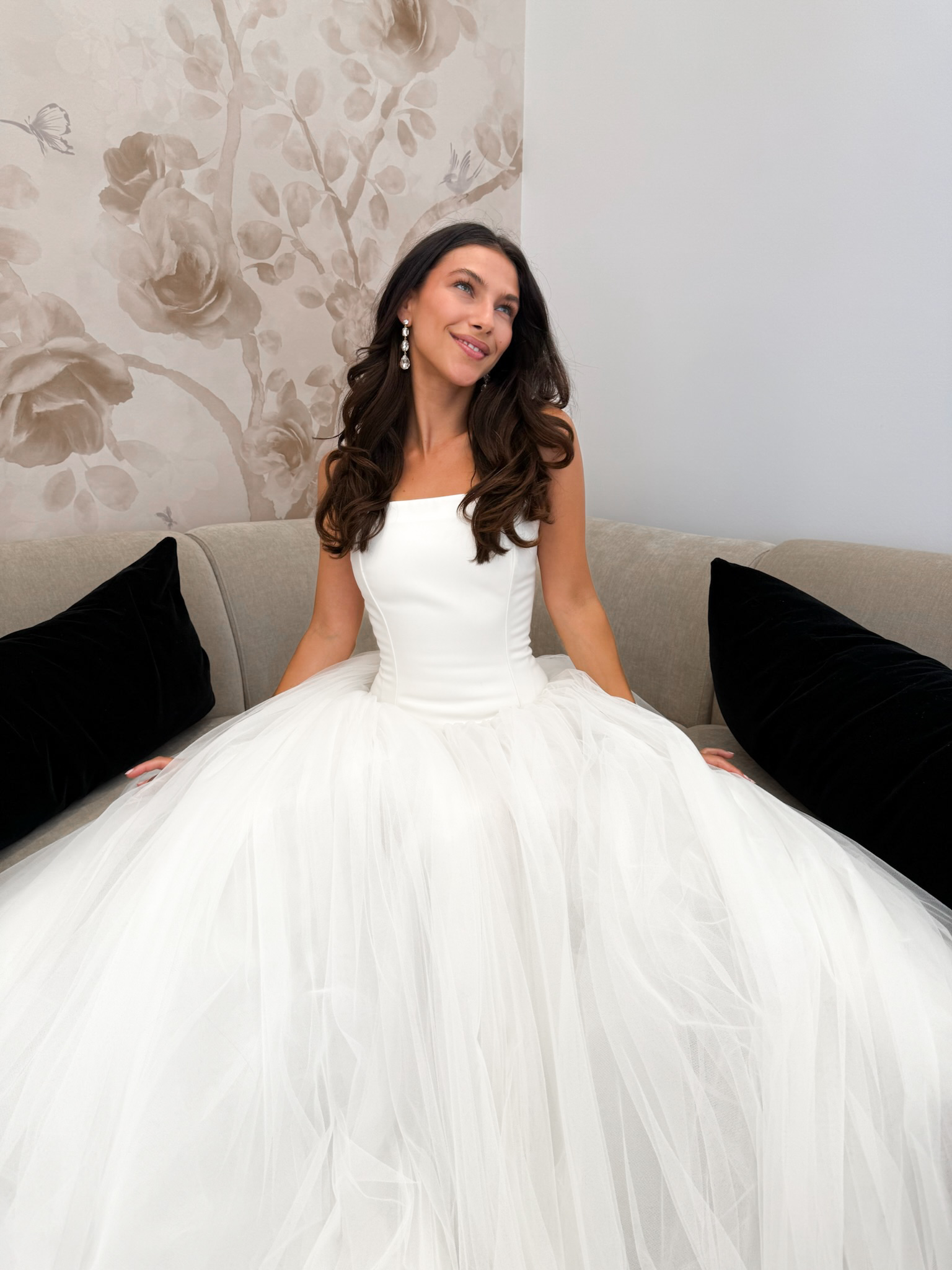
A Mikado ball gown can have a beautifully defined skirt that extends outward from the waist. Instead of relying entirely on layers of tulle for volume, the fabric itself contributes to the shape. The result can be head-turning while still looking polished.
On an A-line wedding dress, Mikado maintains a graceful, uninterrupted line from the waist to the hem. This creates a smooth silhouette that feels classic but not ordinary. The fabric can also give a fitted gown more structure, particularly through the bodice, hips or neckline.
Even a minimalist Mikado wedding dress can make a major visual impact. Without lace or embellishments competing for attention, the eye naturally follows the construction of the gown and the shape it creates around the body.
Why Does Mikado Hold Dramatic Shapes So Well?
Softer fabrics naturally collapse, drape or respond to every movement. Structured Mikado can maintain a more consistent silhouette as you walk, turn and pose for photographs.
Designers often use this quality to create oversized bows, sculptural necklines, dramatic sleeves and statement trains. Pleats remain more defined, skirts retain their volume and architectural details stay visible throughout the celebration.
This structure is especially striking from the back. A long Mikado train can spread into a clean, dramatic shape without becoming visually lost in layers of fabric. For a ceremony in a large church, ballroom or estate, that strong outline can help the gown hold its own within the scale of the venue.
Is Mikado Only for Traditional Wedding Dresses?
Mikado is often associated with classic ball gowns, but the fabric can also feel modern and fashion-forward.
A square neckline, asymmetrical draping, or unexpected cutout can give Mikado a contemporary edge. Strapless column gowns and fitted silhouettes may use the fabric to create crisp tailoring, while clean A-line dresses offer understated elegance.
The final look depends less on the fabric itself and more on how the designer shapes it. Mikado can feel romantic, regal, minimalist or editorial. This versatility makes it worth trying even if you have not imagined yourself wearing a traditional wedding dress.
Is a Mikado Wedding Dress Comfortable?
Mikado feels more substantial than lightweight bridal fabrics, but good construction makes an enormous difference. A well-designed bodice can provide support, while the structure of the skirt may prevent fabric from wrapping around the legs as you walk.
Since Mikado holds its shape, it can also create space between the gown and the body. Brides may find this preferable to a soft fabric that constantly clings or shifts.
During your bridal appointment, sit, walk, and turn in the gown. Pay attention to the weight, bodice support, and placement of any internal structure. Your stylist can help determine which Mikado silhouettes give you the appearance and freedom of movement you want.
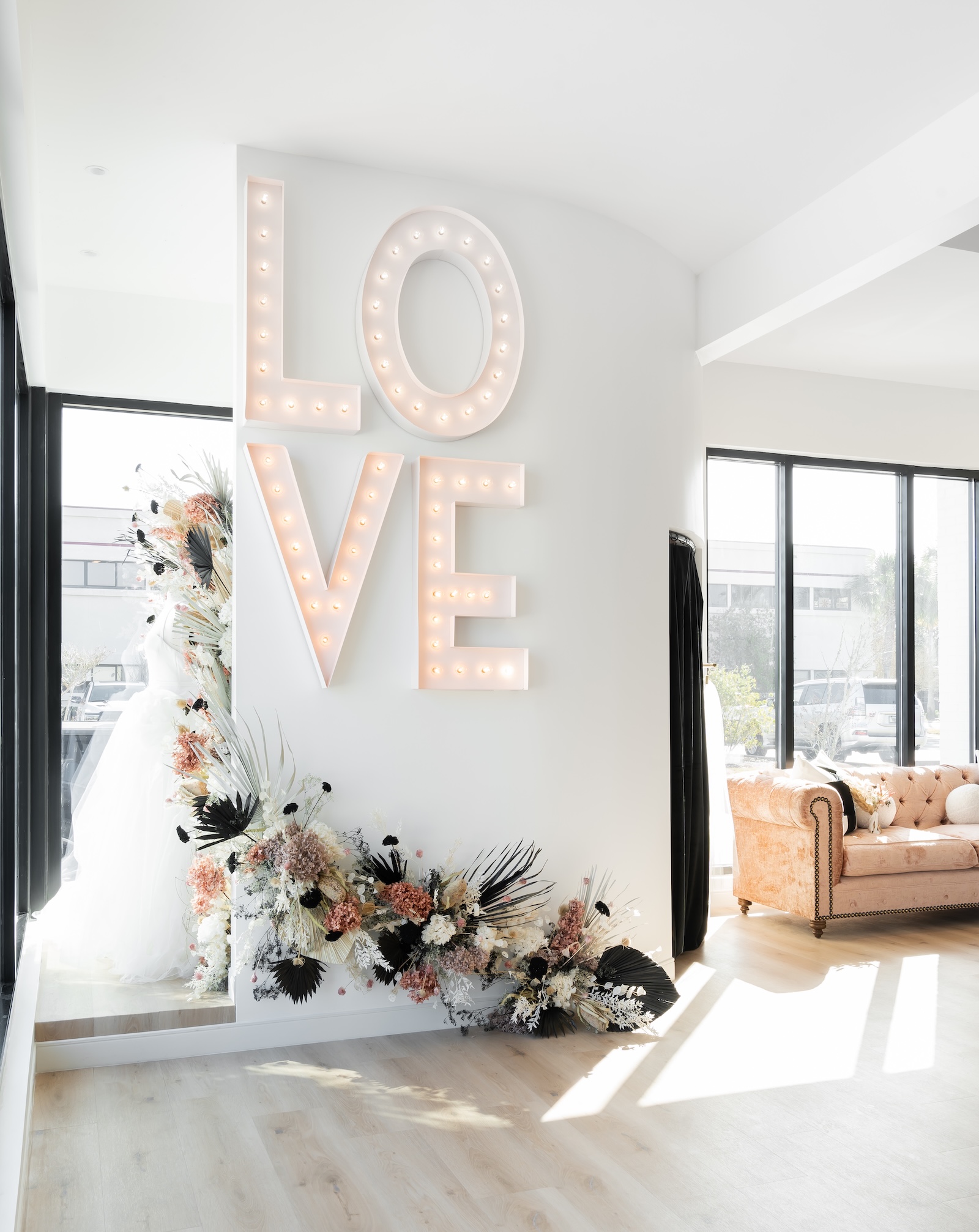
Find Your Mikado Wedding Dress at Love Bridal Boutique
A Mikado gown needs to be experienced in person. The structure, subtle sheen, and movement are difficult to appreciate fully through a photograph.
At Love Bridal Boutique, our expert stylists can help you compare Mikado ball gowns, A-line dresses, and modern structured silhouettes during a private bridal appointment. Visit our Jacksonville Beach bridal boutique to discover how different necklines, waistlines, and skirt shapes can transform the way this striking fabric looks on you.
Frequently Asked Questions About Mikado Wedding Dresses
1. Is Mikado heavier than satin?
Mikado is generally firmer and more structured than many common satin fabrics. Its weight varies by designer and construction, so trying on the gown is the best way to understand how it feels.
2. Does Mikado wrinkle easily?
Mikado typically maintains its shape well, but any wedding dress can develop creases during storage or transportation. Follow the boutique’s instructions for hanging, steaming and preparing the gown before the wedding.
3. Is Mikado suitable for a Florida wedding?
Yes. The venue, season and gown construction matter more than the fabric name alone. For a warm outdoor wedding, consider a sleeveless or strapless Mikado silhouette. Indoor venues and cooler months offer even more flexibility.